
Calm Little Home Guide
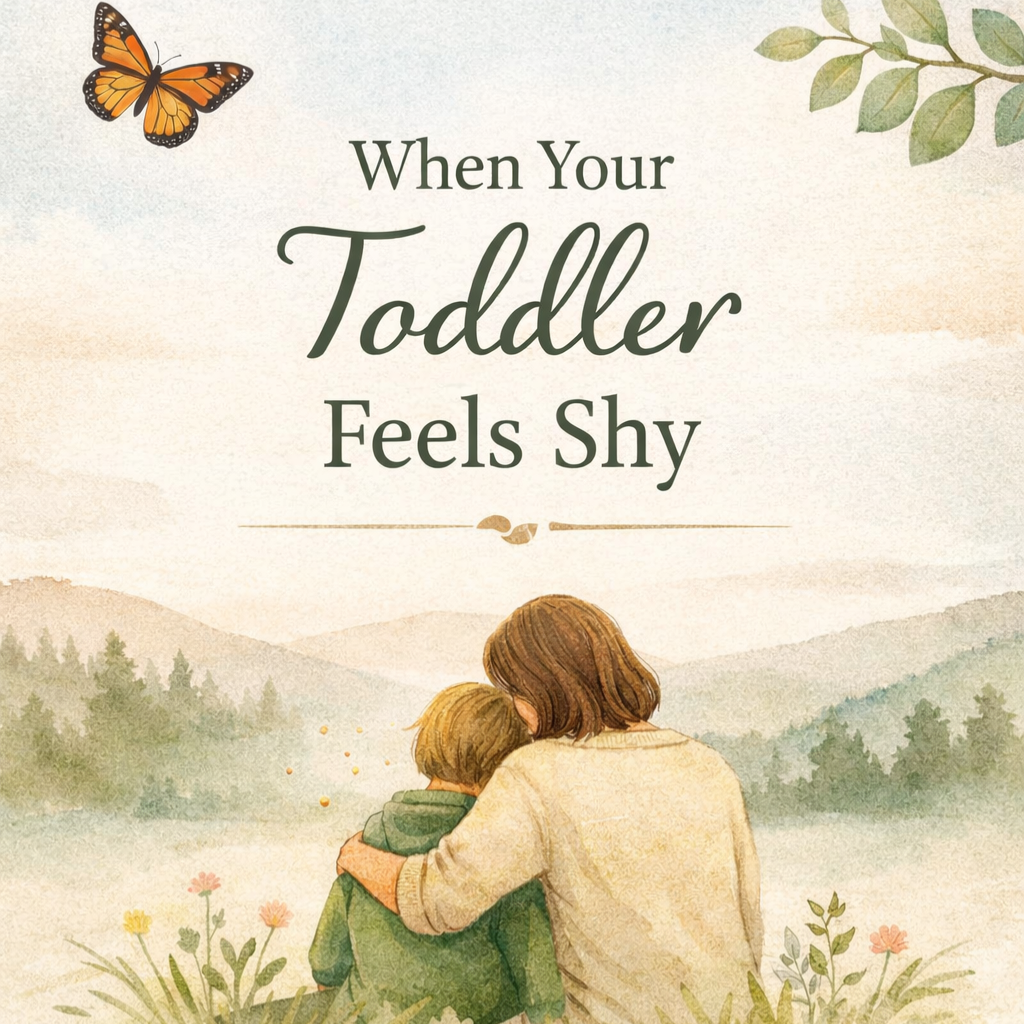
When Your Toddler Feels Shy
A gentle, practical guide to toddler shyness, slow-to-warm behavior, clinginess, quiet moments, social hesitation, and helping your child feel safe without pressure.
For parents of toddlers ages 2-5 who are navigating hiding, freezing, not saying hello, staying close in social situations, difficult drop-offs, and the quiet pressure that comes when your child takes longer to warm up.
If your child hides behind you, clings in new places, stays quiet around other people, or struggles when it is time to separate, this guide was made to help you feel less unsure, more prepared, and steadier in the moments that can feel surprisingly heavy.
When your child feels shy, quiet, clingy, or unsure, it can leave you carrying both their feelings and your own.
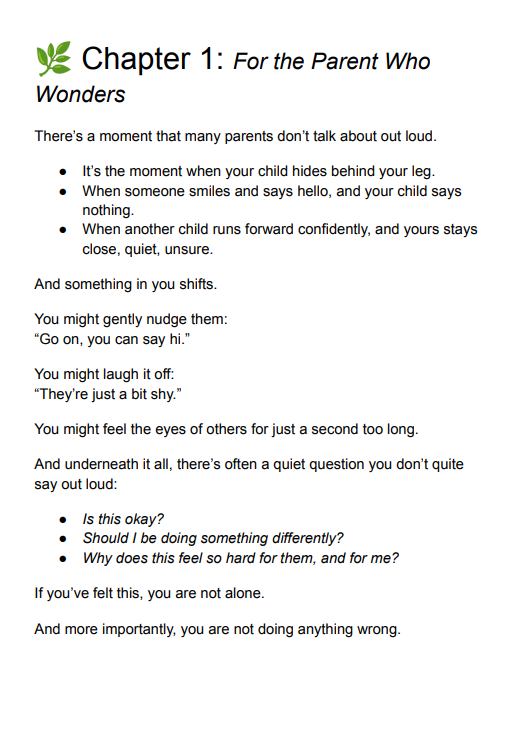
Maybe your child hides behind your leg, goes silent when someone says hello, clings tightly at playdates, or melts down at drop-off even when you try to prepare them ahead of time.
Maybe you want to support them gently, but in the hardest moments, you freeze, over-explain, speak for them too quickly, feel pressure from other people, or walk away wondering if you should have handled it differently.
When Your Toddler Feels Shy helps you understand what is really happening underneath these quiet, clingy, slow-to-warm moments, and gives you a simple, calm path for what to do next. It is rooted in the Calm Little Home approach of connection before correction, calm boundaries, regulation before reasoning, and support that protects your child’s pace instead of pressuring it.
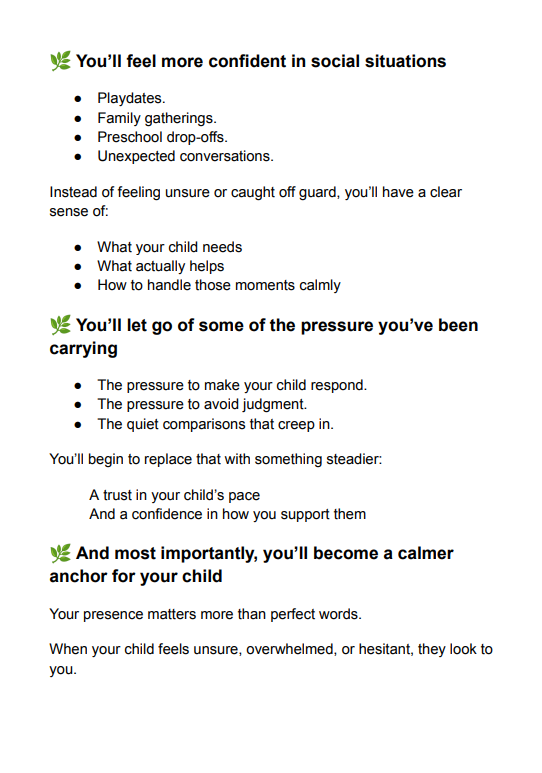
This guide will help you:
Who this is for
This is for you if:
- Your toddler hides behind you, clings, freezes, or goes quiet in social situations
- You feel unsure whether to encourage more, protect their space, or step back
- Your child struggles with greetings, playdates, group settings, or new people
- Drop-offs, preschool, or kindergarten goodbyes feel emotional and heavy
- You want to support confidence without pressuring your child or making them feel rushed
- You often feel unsure what to say when other people expect your child to respond
- You are tired of generic advice and want something warm, clear, and usable in real life
- You want calmer social moments, less pressure, and more confidence in how you support your child’s pace
What’s inside
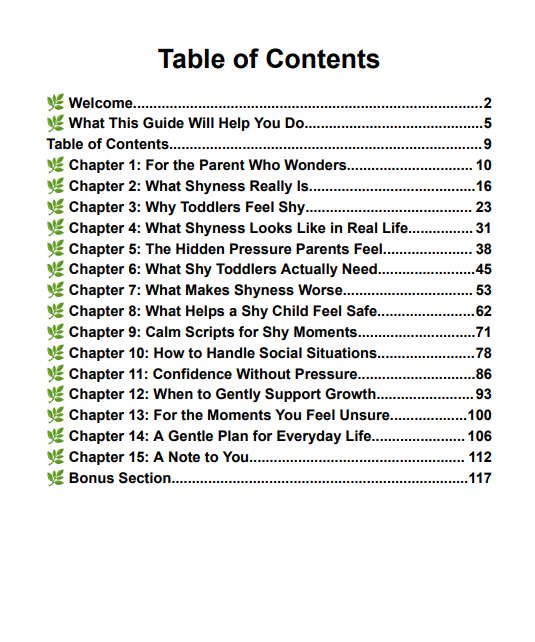
A clear understanding of toddler shyness
Learn what shyness really is, what “slow-to-warm” temperament means, why some children need more time before engaging, and why these moments are usually signs of sensitivity, caution, and a need for safety, not rudeness or defiance.
A simple framework for what shy toddlers actually need
A calm, repeatable way to respond in hard moments using four core supports: Time → Safety → Predictability → A Calm Anchor. This helps you know what matters most when your child is unsure.
Grab-and-go scripts for shy moments
Exact words for greetings, hiding, clinging, freezing, quiet moments, social pressure, playdates, family gatherings, public interactions, and drop-offs, all built around Calm Little Home’s short, practical scripts style.
Step-by-step help for real-life social situations
Practical support for playdates, family gatherings, public moments, group settings, preschool or kindergarten transitions, and the everyday situations where your child’s hesitation feels most visible.
Support for building confidence without pressure
Learn how confidence really grows, how to encourage small steps without overwhelming your child, and how to support growth in a way that feels safe, steady, and sustainable over time.
Parent support for the pressure you feel, too
Support for the hidden pressure, embarrassment, comparison, and second-guessing that can come with raising a shy child, so you feel steadier and less alone in the moments that pull at your own emotions.
Bonus printable support tools
Extra support pages designed to reduce decision fatigue and make the guide even more usable in everyday life, including a shyness scripts cheat sheet, a pocket “what to say” card, a social prep checklist, a calm drop-off routine, a core needs visual guide, and parent reassurance pages.
Why this feels different
This is not a generic confidence guide or a push-your-child-out-of-their-shell plan.
It does not shame your child’s quietness, and it does not leave you with vague reminders to “just encourage them more.”
Instead, it combines emotional reassurance, practical teaching, exact scripts, calm support, and real-life guidance, so you know what to do when your child hides, clings, freezes, stays silent, or struggles to separate.
What Other Parents Are Saying
“This helped me understand that my daughter wasn’t being rude when she hid behind me or stayed quiet. The scripts gave me calm words for the exact moments that usually made me feel awkward and unsure.”
– Tanya
“The way this explains shyness made everything click for me. I stopped feeling like I had to push my son, and started feeling much steadier about supporting him at his own pace.”
– Mira
“I loved that it was both validating and practical. It did not just explain why social situations feel hard for my child, it told me exactly what to do at playdates, greetings, and preschool drop-off.”
– Dasha
FAQ
What age is this for?
This guide is designed for parents of toddlers and young preschoolers, especially ages 2-5.
Will this help with toddler shyness in social situations?
Yes. The guide is built specifically to help with hiding, clinging, staying quiet, freezing, taking longer to warm up, and feeling unsure in greetings, playdates, group settings, and everyday social moments.
Is this just theory, or does it include exact words to use?
It includes both. You will get the “why” behind toddler shyness, but also simple scripts and clear step-by-step support for real-life moments.
Will this help with preschool or kindergarten drop-off?
Yes. There is a full section on separation, drop-offs, and how to support your child with calm, predictable goodbyes that build safety over time.
Will this tell me whether I should encourage my child or step back?
Yes. The guide helps you understand the difference between pressure and support, and shows you how to encourage small steps without overwhelming your child.
Will this help if I feel judged or unsure in these moments too?
Yes. There is a full section on the hidden pressure parents feel, including embarrassment, comparison, social expectations, and how to stay steadier without passing that pressure on to your child.
Is this gentle parenting?
Yes, but in a practical, structured, real-life way. It is rooted in calm boundaries, emotional safety, connection before correction, and regulation-first support.
Is this a good fit if I already feel exhausted and overwhelmed?
Yes. This guide was created to feel supportive, clear, and easy to come back to, especially for parents who need help in the moments when their energy is low and they are not sure what to say.
Get the guide
A gentle next step for calmer words, steadier support, and more confidence in the shy, clingy, quiet, slow-to-warm moments.
You’ll receive:
- The full guide: When Your Toddler Feels Shy
- The 4 Core Needs support framework
- Grab-and-go scripts for real-life shy moments
- Step-by-step help for playdates, greetings, and drop-offs
- Bonus printable script cards, checklists, and support tools
- Instant digital access
$19.99
Get When Your Toddler Feels Shy
Gentle, practical support you can come back to again and again.

Reviews
There are no reviews yet.