
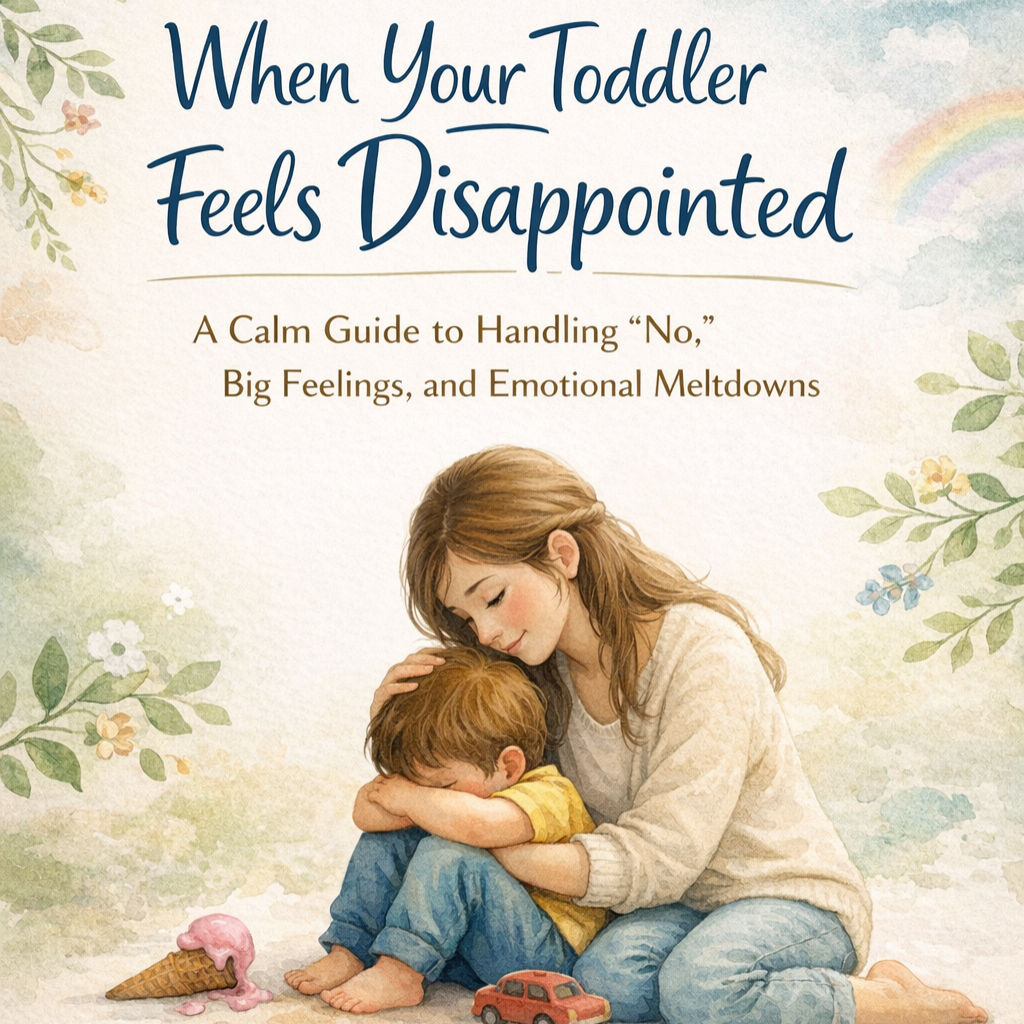
Sometimes one small “no” creates a very big reaction.
The wrong cup. No more screen time. The playground is closed. Someone else got the blue plate. You said no to another cookie — and suddenly the whole world has ended.
When Your Toddler Feels Disappointed helps parents of children ages 2–5 handle those emotional crashes without trying to talk the feeling away or changing the answer just to stop the tears.
Inside the guide
- A clear explanation of why disappointment can feel enormous to a young child.
- Connect → Limit → Lead support for tears, screaming, refusal, collapsing, hitting, and throwing after a disappointment.
- Scripts for hearing no, waiting, leaving fun places, broken expectations, and plans changing.
- Tools for helping your child gradually practice flexibility and recovery.
- Support for holding a boundary when your child is deeply unhappy about it.
- Parent regulation and repair support for the moments when repeated crying or protest wears you down.
- Quick-reference and printable tools.
What it can sound like
After “no”: “You really wanted another one. The answer is still no. You can be disappointed.”
Plans changed: “You thought we were going to the park. That changed, and you’re really upset.”
Unsafe reaction: “You’re disappointed. I won’t let you throw that. I’m moving it away.”
This is for you if…
- Your child regularly falls apart when something does not go the way they hoped.
- You find yourself over-explaining, bargaining, or giving in because the disappointment feels unbearable.
- You want to build flexibility without dismissing the feeling.
- You need clear words for the moments when “no” becomes a meltdown.
Your child does not need to like the boundary for the boundary to be kind.
Digital product. Instant access to the downloadable guide after purchase.


Reviews
There are no reviews yet.