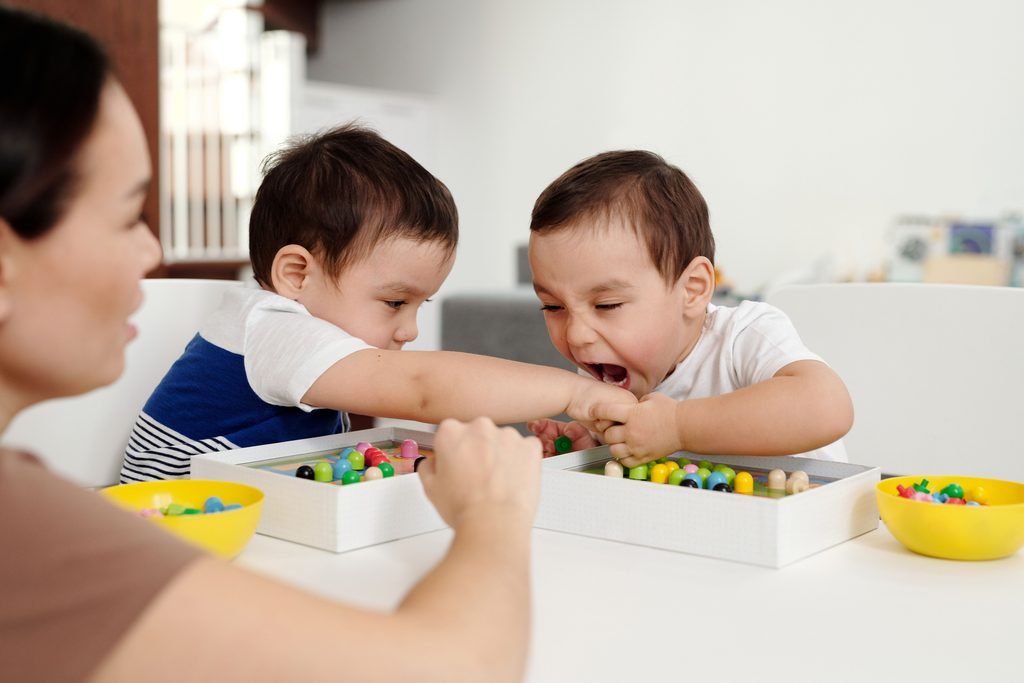
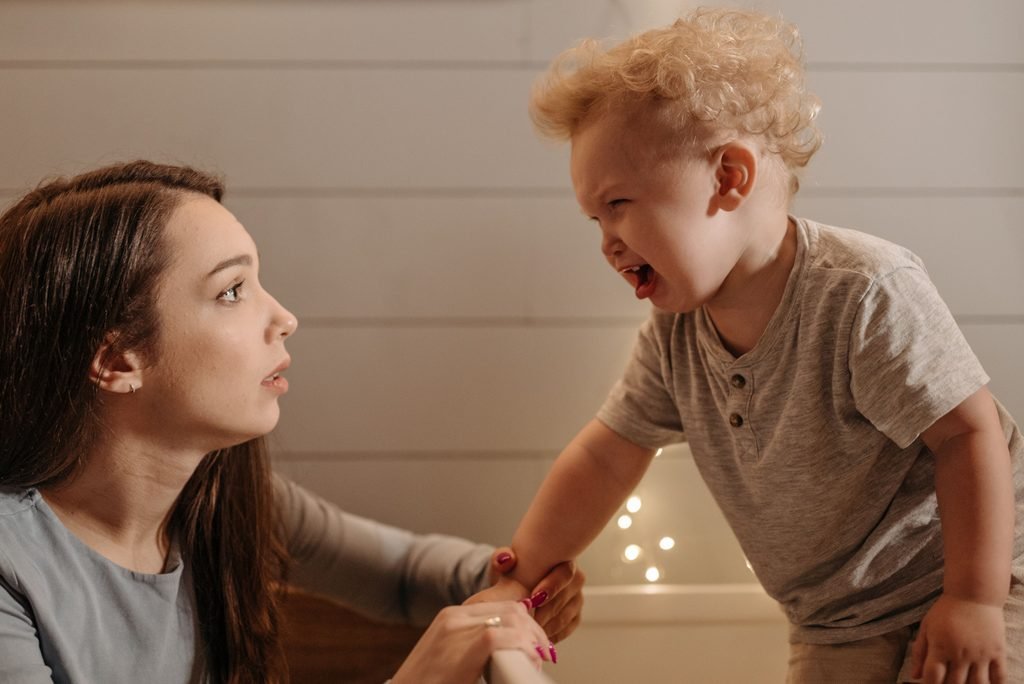
Big feelings, safer bodies
Gentle Parenting a Toddler Who Throws Things When Angry
A flying wooden truck is not the moment for a beautiful speech about emotions. Stop the unsafe throw first. Then help your child find a safer way to be furious.
Safety comes before validation
Gentle parenting sometimes gets caricatured as: “Your toddler launches a block at someone’s head and you crouch down to say, ‘I see you’re angry.’”
That is not the goal.
If an object is being thrown dangerously, move it, block the throw, create distance or move the child. You can care about the emotion and stop the behavior immediately.
“I won’t let you throw that at people. I’m moving it. You’re angry, you can throw this soft ball into the basket.”
That is the practical side of gentle parenting with boundaries.
Use Connect → Limit → Lead
The framework is especially useful when the child’s body is moving faster than their words.
Connect: “You’re really frustrated.”
Limit: “I won’t let you throw hard toys.”
Lead: Move the object, create space and offer a safe outlet if the child can use it.
Notice that the lead step is physical and practical. The boundary does not depend on your toddler saying, “Okay.”
Why toddlers throw when angry
Throwing can do several jobs at once for a young child. It releases energy. It gets an immediate reaction. It creates distance. It communicates “NO!” very efficiently when language is still developing.
Common triggers include:
- being told no
- a sibling touching a favorite toy
- losing a game
- a transition they do not want
- fatigue, hunger or overstimulation
- frustration when something will not work
You do not need to diagnose the exact motive in the moment. But patterns matter for prevention.
If they keep throwing, reduce access
If your child throws the same hard toy again after you have stopped it, you do not have to return it immediately to prove you are gentle.
Try:
“Your body is having a hard time using the truck safely. I’m putting it up for now. You can have it again when we’re ready for safe play.”
That is related follow-through. The toy is temporarily unavailable because the way it is being used is unsafe. You are solving the actual problem rather than adding an unrelated punishment.
Give anger somewhere safer to go
Young children often need a physical alternative, not just “use your words.” Depending on the child and situation, try:
- soft balls into a basket
- pillows onto the floor
- stomping feet
- pushing hands firmly against a wall
- tearing scrap paper with help
- running or jumping once the space is safe
The alternative is not a magic button. A child at the peak of anger may still need you to prevent throwing. Teach the replacement repeatedly when calm so it becomes more available later.
A real example: the tower collapses
Your toddler builds a block tower. A sibling bumps it. Your toddler grabs a wooden block and lifts their arm.
Parent: “I won’t let you throw the block.” Takes or blocks it.
Toddler: screams.
Parent: “You worked hard on that tower. You’re really mad.”
Toddler: reaches for another block.
Parent: “Blocks stay low. I’m moving these while your body is throwing. You can throw the cushion.”
Later, when calm:
Parent: “You were mad when the tower fell. Hard blocks can hurt people. Next time you can say ‘stop,’ call me, or throw the soft ball.”
What about throwing food?
Food throwing is often less about anger and more about experimentation, being finished, boredom or attention. The response can still be simple and related:
“Food stays on the table. If you’re finished, I’ll move the plate.”
If the child keeps throwing: “Looks like you’re done. I’m moving the plate.”
No dramatic punishment is needed. The meal boundary simply becomes real.
What often makes throwing worse
- Shame: “What is wrong with you?” does not teach regulation.
- Long lectures: the child is not in a learning state while launching objects.
- Empty warnings: repeating “don’t throw” without changing access.
- Immediate return: handing the same dangerous object back while the child is still throwing.
- Demanding an apology first: safety and regulation come before social performance.
Teach “where” as well as “what”
Throwing itself is not always the problem. Children need to throw. The skill is learning what can be thrown and where.
“Balls can be thrown outside.”
“Beanbags go in the basket.”
“Blocks stay on the floor.”
Specific rules are much easier for a toddler to learn than “Stop throwing everything!”
Use the same principle for hitting
If throwing turns into hitting or kicking, keep the same order: stop danger, connect briefly, hold the limit, then teach later. See our guide to what to do when your toddler hits.
When to look more closely
If throwing is extremely frequent, difficult to interrupt, causing repeated injury, or seems connected to broader sensory, communication or developmental concerns, professional guidance can help you understand the pattern in context.
FAQ
Should I take the toy away?
If the toy is being used unsafely, temporarily moving it is a logical safety response. You can return it when the child is ready for safer play.
What if my toddler laughs when I stop them?
The laugh does not change the boundary. Some children laugh when excited, dysregulated or testing a reaction. Keep your response boring and consistent.
What if they throw because they are angry at me?
You can acknowledge that directly: “You’re mad at me. I won’t let you throw that at me.” The emotion does not need to be fixed before you protect yourself.
Final takeaway
Gentle does not mean leaving dangerous objects in reach while you validate. Stop the danger, keep your child’s dignity intact, and teach a safer action when their brain is ready to learn.
Club members can also use the Safe Ways to Get Anger Out printable for simple alternatives children can see and practice.
Want a fuller plan for anger that turns into throwing?
The Gentle Leader covers unsafe behavior, boundaries, replacement skills, big feelings, transitions and repair inside one complete 12-chapter CLH guide. New subscribers can get the full digital book free.