Calm Little Home · Independence & Connection
Short answer: If your toddler suddenly wants help with everything, you do not have to choose between doing it all for them and pushing them to be independent. Stay close, help with the part that is genuinely hard, and leave one small piece for them to do.
CLH at a glance: When your toddler asks for help, do not force independence or take over everything. Share the task so your child stays involved while you carry the part that is too hard.
Yesterday they insisted on doing everything themselves.
Today they are standing in the hallway saying, “You do it,” while holding a shoe they have put on independently a hundred times.
You offer encouragement. They hand you the shoe.
You remind them they know how. They get upset.
And suddenly a two-minute task feels like a referendum on whether you are helping too much or not helping enough.
This is a very normal place for parents to get stuck.
Independence is not a straight line. Toddlers move back and forth between “I do it!” and “You do it!” depending on tiredness, stress, connection, novelty, hunger, transitions, and how much effort they have already spent that day.
Wanting help does not mean they have lost the skill
A child can know how to put on shoes and still want you to do it.
A child can know how to climb into the car seat and still ask to be lifted.
A child can feed themselves and suddenly ask you to hold the spoon.
The skill and the need for support can exist at the same time.
Adults do this too. Sometimes we know how to solve a problem but still want someone nearby while we do it. Sometimes we are capable but tired. Sometimes the task itself is easy, but starting it feels hard.
With toddlers, that gap is even bigger because their capacity changes dramatically across the day.
Start by asking: is this a skill problem or a capacity problem?
Before deciding how much to help, look at what is happening around the request.
Skill problem
The task is new, physically difficult, confusing, or genuinely beyond what your child can do alone yet.
Capacity problem
Your child can usually do it, but they are tired, overwhelmed, rushed, disconnected, or simply out of energy.
The response can be different.
If the skill is new, teach and help.
If the skill is familiar but capacity is low, connection and partial help may be enough.
“You usually put your shoes on yourself. Today you want help. I’ll hold the shoe open and you push your foot in.”
You are supporting without taking the whole task away.
Use the “one piece for me, one piece for you” approach
This is one of the easiest ways to support a toddler who wants help with everything.
Break the task into parts.
- You hold the coat. They push in the arms.
- You start the zipper. They pull it up.
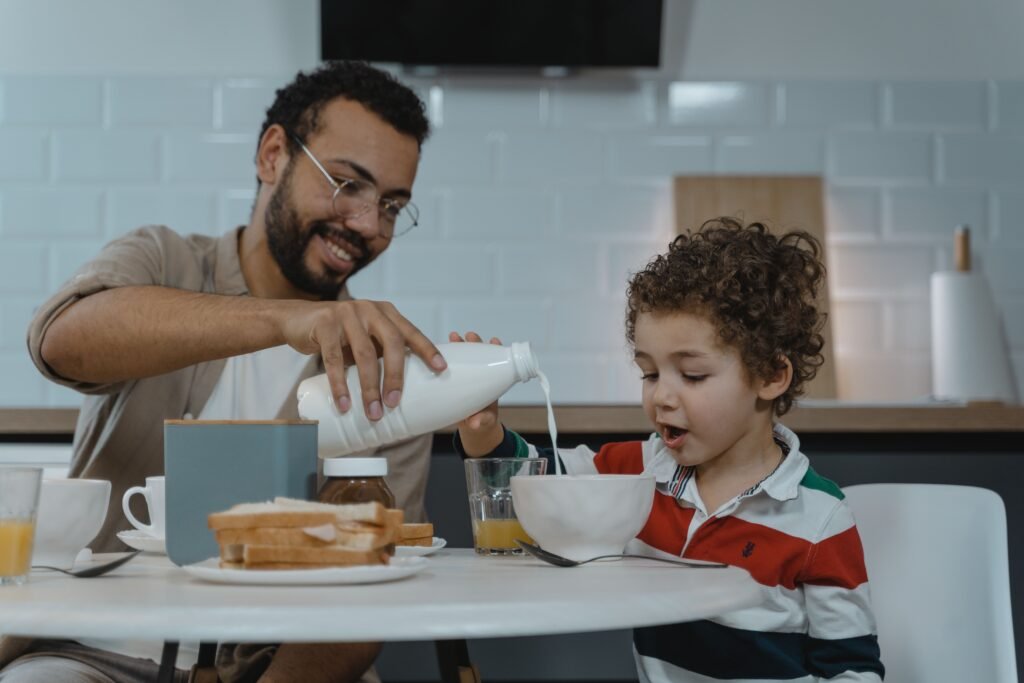
- You scoop the food. They bring the spoon to their mouth.
- You loosen the lid. They twist it off.
- You gather the toys. They put them in the basket.
- You pull the sock over the heel. They pull it up the leg.
The task gets completed, but the child still gets an experience of participation.
The goal is not maximum independence in every moment. The goal is repeated experiences of “I can do part of this.”
Do not turn independence into a test
It is tempting to say:
“I know you can do it.”
“You did it yesterday.”
“You’re a big kid now.”
Those sentences are usually meant to encourage.
But when a toddler is already struggling, they can land like pressure.
A gentler version keeps the confidence without turning the moment into proof:
“You know this one. I’ll stay right here while you start.”
Or:
“You want help. I can help with the first part.”
Sometimes helping is the fastest path back to independence
Parents sometimes worry that helping with a familiar task will create dependence.
But a small amount of support can actually reduce the struggle enough for the child to re-engage.
Imagine your toddler is exhausted at bedtime and wants you to put on their pajamas.
You could spend ten minutes insisting they do it because they are capable.
Or you could put the shirt over their head, let them push their arms through, and move on.
Tomorrow morning they may be back to “I DO IT!” before you have even touched the waistband.
One supported moment does not erase a skill.
Watch for connection requests hiding inside “help me”
Sometimes “help me” is not primarily about the task.
It is a small bid for closeness.
This often shows up after daycare, after a parent has been busy, during a sibling-heavy day, or when the child is moving through a clingier phase.
“You want me close while you do it. I’m right here.”
You do not always have to respond by doing the task.
Sometimes your presence is the help.
Give connection before demanding independence
If your child is repeatedly asking you to do things they can normally do, try a short connection reset before correcting the pattern.
Ten minutes of floor play, a cuddle on the sofa, reading a book, or simply sitting close while they snack may reduce the constant “do it for me” requests.
Not because connection is a trick to make them compliant.
Because sometimes the child is asking for you before they are asking for help.
When you genuinely cannot help
There will also be moments where you are holding a baby, cooking dinner, carrying groceries, or simply need your child to do the part they can do.
You can set that limit without turning it into a lecture about independence.
“My hands are full. You can carry your shoes to the door. I’ll help you put them on when we get there.”
Or:
“I can’t feed you right now. Your spoon is here. I’ll sit beside you while you eat.”
The message is clear: I care, and I am not available to do this part for you.
What if they melt down when you do not help?
A meltdown does not automatically mean you made the wrong choice.
If the request is reasonable and you have capacity, helping is fine.
If you cannot or do not want to do the whole task, you can hold that limit too.
“You really wanted me to do all of it.”
“I’ll help with the zipper. You pull it up.”
“You’re upset. I’m still here.”
You do not need to add a speech about responsibility while your child is crying.
Keep the task simple. Keep your presence steady.
Avoid secretly doing the whole task
Sometimes adults say, “You do it,” but then gradually take over every part because it is faster.
The child reaches for the zipper, and we zip it.
They reach for the cup, and we pour it.
They pick up one block, and we clean the other nineteen.
If independence is the goal, leave a real piece of the task available.
It can be tiny.
But let it actually belong to them.
Make everyday tasks easier to succeed at
Sometimes toddlers ask for help because the environment makes independence unnecessarily hard.
You can reduce friction without turning your home into a perfect Montessori classroom.
- Keep frequently used shoes where your child can reach them.
- Choose clothing that is easier to pull on when possible.
- Use a small stool for handwashing.
- Put a few safe cups or bowls at child height.
- Keep cleanup baskets simple and obvious.
- Offer smaller water pitchers or containers when pouring.
Good setup turns “do it yourself” from a demand into a realistic option.
Independence grows through repetition, not pressure
A toddler may need hundreds of small chances to practice the same everyday skills.
They will not always want to.
That is okay.
Your job is not to force independence at every opportunity. It is to keep making participation available.
“I’ll start it. You finish.”
That sentence alone can carry a surprising amount of family life.
What if your toddler refuses help too?
Of course, the opposite problem exists.
You offer help and suddenly hear:
“NO! ME DO IT!”
When the task is safe and time allows, let them try.
If time is short or safety matters, lead clearly.
“You wanted to buckle it yourself. We need to go now, so I’m going to finish the buckle.”
You can respect the desire for independence without handing over every decision.
Do not measure independence by speed
Independent toddlers are usually slower toddlers.
They put shoes on the wrong feet. They spill. They restart. They get distracted halfway through. They carry one spoon at a time instead of the whole stack.
If we only allow independence when it is efficient, children do not get many chances to practice it.
When you have time, let the slow version happen.
When you do not have time, help more.
Both can be good parenting.
Five phrases for the “help me” phase
“I’ll help with the first part. You do the next part.”
“You want me close. I’ll stay here while you try.”
“Do you want a little help or a lot of help?”
“I can hold it while you push.”
“You’re tired. We can do this one together.”
When to step back more
If you notice that you are routinely doing tasks your child is eager and able to do, experiment with waiting a little longer.
Pause before fixing.
Ask before helping.
Give one clue instead of completing the task.
Let a harmless mistake stay harmless.
This is especially useful for parents who naturally move fast and solve problems quickly.
Sometimes the most supportive thing you can do is not jump in yet.
When to help more
There are also seasons where a child genuinely needs more support.
Illness, poor sleep, a new sibling, starting preschool, travel, separation, family stress, or a developmental leap can all temporarily increase requests for help and closeness.
You do not need to panic about creating bad habits.
Offer more support where you can, keep a few simple expectations, and watch for capacity to return.
Temporary dependence can be part of healthy independence. Children often move forward more easily when they know they are allowed to come back for support.
A real CLH moment: “You do it” at the worst possible time
You are already late. Your toddler, who dressed independently yesterday, suddenly sits on the floor and says, “You do pants.”
This is the moment where parents often swing to one extreme: doing everything because there is no time, or refusing all help because “you know how.”
Try splitting the task instead:
Connect: “You want help today.”
Support: “I’ll hold the pants open.”
Leave a piece: “You put your feet in, then I’ll pull them up.”
You are still moving the morning forward, but your toddler remains part of the task instead of becoming a passenger in it.
The takeaway
When your toddler wants help with everything, resist the urge to turn every request into a lesson about independence.
Look at the child in front of you.
Are they learning?
Are they tired?
Are they asking for connection?
Do they need the whole task done, or just one difficult piece?
Help enough to make the next step possible.
Then leave one part for them.
Independence is not built by refusing help.
It is built through hundreds of small experiences of being supported while gradually doing more for yourself.
Keep Reading
Want a calmer plan for everyday toddler resistance?
The Gentle Leader gives you the Calm Little Home framework for boundaries, transitions, hitting, repair, cooperation, and the moments where you are not sure whether to help, wait, or step in. The complete guide is free for new subscribers.